

This site contains affiliate links, view our Disclosure Policy for more information. CTK also utilizes AI tools, view our AI Policy here for more information.
Fall wreath designs that feel cozy, chic, and timeless. Discover how to style or craft your own front door masterpiece for autumn.

In the rhythm of seasonal living, few gestures are as quietly transformative as the addition of a fall wreath. It is one of those rare design details, compact in scale yet expansive in impact, that signals a deliberate shift in atmosphere. A wreath is not merely an ornament for your door; it is a subtle declaration that your home moves in step with the season.
From an interior design perspective, I often encourage clients to view the wreath as a tonal prelude, a cue that sets the aesthetic intention for the rooms beyond. Whether hung on an entry door, over a console mirror, or layered atop a cabinet, a well-considered wreath introduces warmth and texture without overtaking the space. Its success lies not in novelty, but in harmony with your palette, your materials, and the architecture of your home.
Fall Wreath Ideas
When considering a fall wreath, resist the impulse to begin with Pinterest trends or the color of the year. Instead, begin with context. Ask yourself: how does this wreath relate to the design language already at play in your home? If your interiors feature warm white walls, oak cabinetry, matte stoneware, and soft textiles, your wreath should mirror those qualities. Materials like wheat, preserved eucalyptus, linen ribbon, and raw grapevine work far better in such a setting than plastic pumpkins or high-gloss faux foliage.
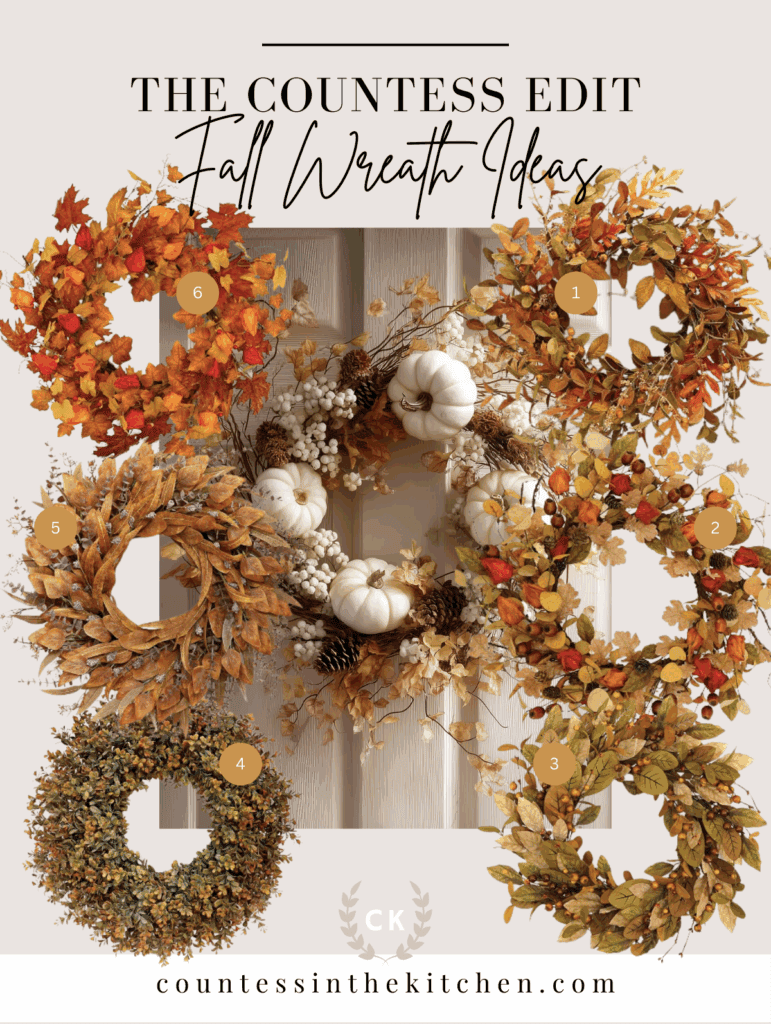
1. Multi color fall wreath | 2. Fall lantern flower wreath | 3. Muted leaf wreath | 4. Mock orage fall wreath | 5. Dirend leaf wreath | 6. Bright fall leaf wreath
Begin with Materials, Not Motifs
Think in terms of materiality rather than theme. Instead of searching for a “pumpkin wreath” or a “thanksgiving wreath,” ask: what natural textures am I drawn to in fall? Do I gravitate toward bleached botanicals, golden ochre leaves, dried citrus, or deep oxblood-toned foliage? These details will naturally guide your design.
For example, if your home includes antique brass lighting, consider including dried magnolia leaves or copper-dyed ruscus to create tonal coherence. If your style leans Scandinavian, a wreath of wheat and airy pampas on a minimal ring may be all you need. This approach ensures the wreath doesn’t feel like a holiday prop, but an extension of your interiors.
Color Harmony and Tonal Layering
Color is often where most fall wreaths fall short. Too often, people choose saturated oranges and reds that clash with the rest of their palette. Instead, opt for tonal layering, soft browns, warm taupes, golden creams, and olive greens that feels refined and intentional. These colors hold up over time and allow the wreath to transition beyond Halloween or Thanksgiving.
If you want a slightly bolder palette, consider restraint in placement: place the wreath outdoors, where seasonal vibrancy complements the natural landscape. Indoors, keep colors muted to avoid disrupting visual calm.
Function as a Styling Tool
In addition to aesthetics, think about how a wreath can function as a styling anchor. A large wreath above a fireplace mantle can replace a framed piece of art for the season, while a narrow one hung over the corner of a full-length mirror introduces seasonality in a modern way. Small-scale wreaths can punctuate unexpected spaces: the back of a pantry door, above a bedhead, or resting flat on a dining table as part of a centerpiece. Wreaths don’t need to live on doors, they can act as sculpture.
Create a Design Brief for Yourself
Before purchasing or creating a wreath, sketch out a simple style guide. Start with three adjectives: refined, earthy, textural. Let those guide your materials. Then note your color range: perhaps wheat, moss, cream, walnut. List the textures you want represented: maybe you want dried grass, linen ribbon, and curled bark. Finally, define the form: circular, oval, or asymmetrical.
By building a mini design brief like this, you’ll avoid impulse purchases and ensure that everything you choose will harmonize once styled.
Balance and Scale
Lastly, don’t underestimate scale. A small wreath on a large exterior door can feel underwhelming; a voluminous wreath in a tight hallway can feel aggressive. Step back and evaluate how much space the wreath has to breathe. If in doubt, go slightly larger for exteriors and more minimal for interiors. Scale communicates intention.
Perfect Floral Fall Wreath Ideas
A floral fall wreath offers the opportunity to soften a space while introducing seasonal color. Rather than relying on artificial autumnal hues, I prefer to work with a more nuanced palette, faded marigold, burnt coral, mauve, ivory, and muted greens. Dried florals such as strawflower, hellebore, or scabiosa pods lend an aged beauty that feels both organic and refined.
The composition should read as considered, not crowded. I tend to favor asymmetrical arrangements, where florals are concentrated to one side or flow in a soft crescent, allowing moments of negative space to shine. To complete the look, finish with a natural textile ribbon, raw silk or velvet in a complementary tone. Display it in an entryway, a powder room, or on a pantry door for a gesture that is seasonal but never overstated.


Leaf Fall Wreath Choices
Leaf wreaths celebrate the sculptural elegance of the season. Unlike florals, which offer softness, leaves bring shape and rhythm. Varieties such as magnolia, beech, and dried eucalyptus offer a rich tonal spectrum—from deep rust to sage to parchment—that pairs beautifully with neutral interiors and traditional façades alike.
For a collected yet edited effect, select one primary leaf type and build from there. A monochromatic magnolia wreath, for instance, can feel grounding when styled against limestone or painted brick. If layering in other elements, do so sparingly: a few seed pods, dried twigs, or preserved berries can provide gentle contrast without compromising restraint. Leaf wreaths are particularly effective on exterior doors or styled above a console alongside ceramics and candlelight.


Simple Fall Wreath Ideas
A simple fall wreath requires the same level of design consideration as its more elaborate counterparts. The simplicity lies not in effort, but in its discipline. These wreaths are best when minimal, using a restrained palette and one or two natural materials—dried ruscus, wheat, or pampas, for example arranged on a thin metal or wrapped vine frame.
Minimal wreaths suit homes where architecture and finish take precedence. When installed against a limewashed wall or above a sleek fireplace, they serve as an atmospheric punctuation rather than a focal point. Choose a linen or suede ribbon in a desaturated tone stone, camel, or slate and secure with a brass hook or clear adhesive disc. The absence of ornament becomes, in itself, a kind of luxury.

For decorating ideas click here!
Cute Fall Wreath
In more casual or personal spaces, a wreath with charm and warmth has its place, provided it still adheres to thoughtful design. Rather than veering into novelty, I recommend leaning into scaled-down elements: miniature gourds, hand-felted objects, dried citrus, or preserved mushrooms. These can be arranged in a balanced, textural format that still reads elevated.
Color is key here. Avoid over-saturation. Instead, ground playful touches in a palette of earth tones, think oatmeal, rust, blush, and ochre. A wreath like this works well in a back hallway, a mudroom, or a breakfast nook, where its tone feels friendly and inviting. Finished with a gingham or cotton twill ribbon, it lends a softness that feels authentic to homes with layered, lived-in charm.


Elegant Fall Wreath Picks
An elegant wreath speaks in whispers. Its materials are refined, its color story subdued, and its placement intentional. In my practice, I reserve these for homes with classical proportions or clean architectural lines, spaces that benefit from the added texture without distraction.
Materials such as bleached fern, fan palm, silk ribbon, and dried lunaria offer tone-on-tone interest. The form can be more sculptural, an oval or free-form silhouette adds sophistication. These pieces feel most at home in transitional spaces: over a set of double doors, across a tall bookshelf, or layered on a mirror in the dining room. The goal is not to decorate, but to enhance, adding rhythm, materiality, and quiet richness to the room.


Maintaining and Storing Fall Wreaths
Taking care of your wreath will help it last for many seasons to come. For cleaning, a gentle shake or a quick once-over with a soft brush usually does the trick. If it’s really dusty, you can use a hair dryer on the cool setting.
When it comes to storage, the key is to keep your wreath in a cool, dry place. A wreath storage box is ideal, but if you don’t have one, try hanging it in a closet or laying it flat in a box with some tissue paper.
To extend the life of your wreath, try to keep it out of direct sunlight and away from heat sources. And if it’s an outdoor wreath, bring it inside during harsh weather.
Fall Wreath Recap
The most compelling decor does not compete for attention, it collaborates with its surroundings. A fall wreath, when selected with discernment and styled with clarity, becomes an integrated extension of the home rather than a standalone gesture.
To that end, it’s essential to treat your wreath not as an ornament but as part of your overall design vocabulary. Whether placed on a front door, suspended above a console, or layered against open shelving, it should quietly echo the tones, textures, and spatial rhythm of your existing interiors. This is not about matching for the sake of uniformity, but about creating visual continuity that feels intentional and effortless.
Equally important is the choice of materiality. Opting for natural fibers, preserved botanicals, and artisanal details not only enhances aesthetic value, but also aligns with the growing desire for decor that is thoughtful, enduring, and rooted in craftsmanship. The goal is to elevate, not embellish. Let the form follow function, the color palette align with your architectural envelope, and the scale serve the space it inhabits.
Ultimately, whether you gravitate toward sculptural minimalism or textural abundance, a well-considered fall wreath offers more than decoration. It introduces a seasonal inflection point, an opportunity to refresh your space in harmony with nature’s rhythm. In doing so, it reinforces your home’s identity with subtlety, elegance, and intention.
If you are looking to create your own wreath here is a helpful YouTube Link