

This site contains affiliate links, view our Disclosure Policy for more information. CTK also utilizes AI tools, view our AI Policy here for more information.
Console Table Decorating inspiration with tips for timeless styling, from lamps to books to organic touches that pop.

Console tables serve a practical and visual role in well-composed interiors. They help define circulation paths, soften transitions between rooms, and offer surfaces that support daily routines without competing for attention. In the homes often associated with Nancy Meyers’ films, console tables feel embedded within the architecture rather than added afterward. They belong to the space because they respond to how the home is actually used.
The distinguishing quality of this approach lies in how lived-in details are allowed to coexist with refinement. These surfaces hold books that reflect genuine interests, lamps selected for the warmth and spread of their light, and objects that feel accumulated rather than arranged. The result is a composition that feels natural and comfortable while still visually resolved.
From a decorator’s perspective, successful console styling begins with understanding placement and proportion. A console near an entry must accommodate movement and function efficiently. Behind a sofa, it should visually connect seating areas without interrupting flow. Along a hallway or dining room wall, it provides scale and rhythm, breaking up long expanses while adding depth to the room. When the table’s role within the layout is clear, styling becomes a matter of refinement rather than invention.
Where Console Tables Can Be Located
Console table decorating works best when they act as quiet connectors between spaces. Rather than thinking of them as decorative furniture, I encourage clients to see them as transitional tools, pieces that help guide movement, soften boundaries, and give structure to areas that might otherwise feel unresolved. Where you place a console depends largely on whether you’re working with a house or an apartment, and how circulation functions within that footprint.

Steal Her Signature Look!
Our Nancy Meyers Style Guide spills the secrets to creating that effortlessly chic, movie-set home you’ve been pinning for years… and it’s free!
Console Tables In a Home
In larger homes, console tables often succeed in areas where rooms open into one another. Entryways remain the most natural starting point. A console positioned along the first wall you see upon entering establishes rhythm immediately, offering a place for everyday essentials while visually easing the transition from exterior to interior. Here, the table helps the home feel organized without appearing overly styled.
Behind a sofa is another effective placement, particularly in open-plan living spaces. This location introduces definition between seating and circulation zones without adding visual bulk. I frequently use this position to layer in lighting, especially in rooms where overhead fixtures feel harsh or insufficient.
Dining rooms and hallways also benefit from console tables. Along a blank dining room wall, a console adds scale and prevents the space from feeling sparse. In hallways, it breaks up long sightlines and provides an opportunity to introduce texture, art, or soft lighting that encourages movement through the space rather than rushing past it.
Apartment Console Tables
In apartments, console tables need to work harder while taking up less space. Entryways, no matter how small, are prime locations. A slim console instantly creates a sense of arrival, even in studio or one-bedroom layouts, helping define where “home” begins.
In open living areas, a console placed behind a sofa or along a shared wall can subtly separate zones without closing them off. This approach works especially well when square footage is limited but visual structure is still needed. In dining nooks or along unused walls, consoles provide surface space without the depth of larger storage pieces.
Actionable steps:
- Identify transition points where rooms meet or movement naturally slows.
- Choose slim profiles for apartments and longer, more substantial pieces for larger homes.
- Use consoles to introduce lighting and texture in areas that feel visually flat.
Layout for Console Table Decorating
When styling a console table, I approach the surface the same way I would any well-composed room. I start with foundational design principles, scale, spacing, material balance, because they remove guesswork and allow the layout to come together with ease. When those elements work in harmony, the table feels resolved rather than styled.
Looking to interiors often associated with Nancy Meyers offers a helpful visual reference for this approach. Her spaces demonstrate how layered compositions can feel approachable and lived-in without appearing overly arranged. The styling never distracts from the home itself. Instead, it supports how the space functions and how people move through it, which makes these layouts easier to understand, and easier to adapt to real homes.
With that lens in place, there are several reliable layout approaches I return to again and again. Each one relies on clear visual logic and can be adjusted based on the size and location of the console. But before we get into that, here are some great Console table options to explore on Amazon.
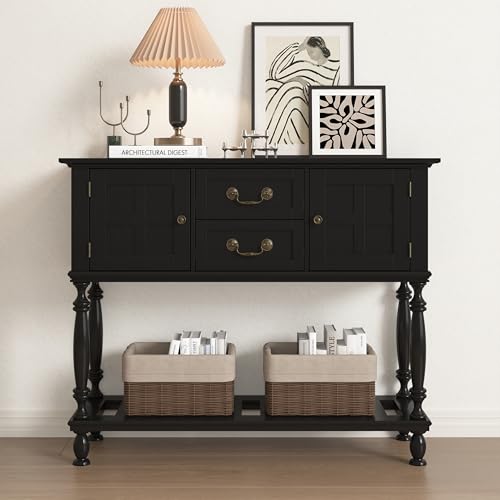


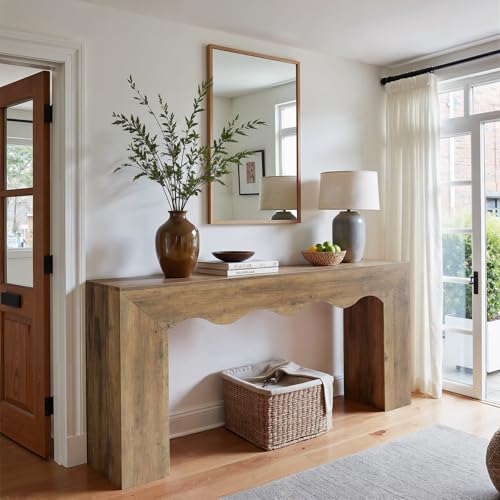
Six proven console table layout approaches:
- Anchored Asymmetry
Begin with one taller element, such as a table lamp or ceramic vessel, placed slightly off-center. Counterbalance it with a lower, more horizontal grouping on the opposite side. This approach works particularly well on medium to long consoles where visual weight needs distribution without rigidity. - The Central Focus
Establish a single focal point, often artwork or a sculptural object, at the center, then layer supporting elements outward. This layout suits shorter consoles and narrow entry tables, where clarity matters more than abundance. - The Layered Library
Use stacked books as a foundation, then build upward with smaller objects. Bowls, candles, or sculptural accents introduce height variation while keeping the composition grounded. This layout works best on deeper consoles with enough surface area to support layering. - Balanced Vertical Pairing
Place two taller elements, lamps or vessels, toward each end of the console, allowing the center to remain lower and lighter. This structure suits long dining room consoles that need definition without visual clutter. - The Collected Cluster
Group three to five objects closely together, varying height, texture, and material. This layout excels on smaller apartment consoles, where fewer pieces must work harder to create interest. - The Editorial Lean
Lean artwork casually against the wall and layer objects in front to create depth. This approach introduces a relaxed, editorial quality and works especially well on shallow consoles where vertical emphasis matters more than width.
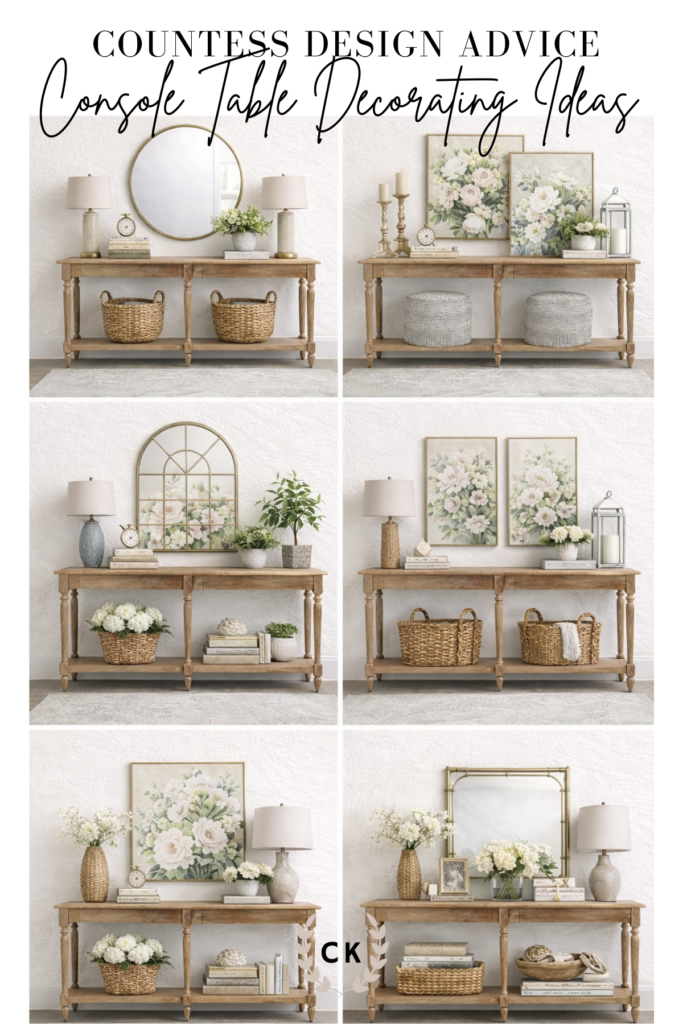
Layout guidance by console size:
- Short consoles: Central focus or tight clusters prevent the surface from feeling crowded.
- Long consoles: Use anchors at one or both ends to create rhythm and visual pauses.
- Narrow consoles: Prioritize height and vertical layering over wide groupings.
Incorporating Character Through Decor Objects and Patina
Once the layout feels resolved, character enters through the objects themselves. I encourage sourcing pieces that carry meaning rather than filling space quickly. Artwork from local painters, small galleries, or independent designers introduces individuality. Sculptural objects collected while traveling, woven goods, carved wood, shells, ceramics, or antique vessels, add layers of memory that no store-bought arrangement can replicate.
Patina plays an essential role here. Materials that show age and use, brass with softened edges, wood with visible grain and wear, ceramics with subtle imperfections, bring depth and credibility to a console table. These surfaces ground the arrangement and give it a sense of permanence. New pieces can work beautifully, but they benefit from sitting alongside items that have already lived a life.
Ultimately, a successful console table layout feels settled but flexible. It leaves room for change, rotation, and evolution. That sense of continuity, where objects feel collected over time rather than placed all at once, is what gives these interiors their warmth and lasting appeal.

Delivered Straight to your Inbox
High-quality art designed by CTK…. and it’s free. Does it really get any better than that?! Sign up for our newsletter and get these 3 designs in 4-5 different sizes sent directly to your email.
Console Table Decorating Recommendations
When clients ask me how to choose the right console table, I always start with the piece itself before discussing décor. Shape, scale, material, and finish determine how successfully a console integrates into a home. Once those fundamentals align, styling becomes far more intuitive and far less forced.
Interiors often associated with Nancy Meyers offer a helpful reference point because the furniture never overwhelms the space. Console tables in these homes support the architecture and lifestyle first, then quietly reinforce the aesthetic. The key lies in selecting a table that suits both the scale of the room and the character you want the space to convey.
Before choosing a style, consider how the console will function. Narrow profiles suit high-traffic areas such as entryways and hallways. Longer, weightier consoles work well in dining rooms or behind sofas, where they can visually anchor larger spaces. Once size and placement feel resolved, the aesthetic choice becomes much clearer.
Elements of a Classic-Inspired Nancy Meyers Console Table
Classic Nancy Meyers–leaning console table decorating typically favors timeless proportions and natural materials. Look for solid wood construction, gently tapered legs, and finishes that feel warm rather than glossy. Medium-toned woods, oak, walnut, or softly aged maple, work particularly well. These tables pair easily with traditional lamps, neutral artwork, and collected objects without feeling heavy or formal.
For homes that lean toward a cottage-inspired Nancy Meyers aesthetic, consoles with softer detailing shine. Painted finishes in warm whites, creams, or pale greige feel appropriate here, especially when paired with turned legs or subtle drawer detailing. Slightly distressed surfaces add character and help the table feel settled rather than new. This style works beautifully in entryways and dining rooms where comfort and charm matter most.
An English countryside–inspired approach calls for more visual weight. Darker woods, mahogany, stained oak, or antique pine, bring depth and gravitas. Look for consoles with thicker tops, simple carvings, or traditional stretcher bases. These pieces suit larger homes, hallways, or living rooms where architecture already carries presence.
For a more traditional Nancy Meyers aesthetic, symmetry and proportion guide the choice. Consoles with clean lines, subtle classical references, and rich but muted finishes feel appropriate. These tables often work best when paired with matching lamps or balanced décor arrangements.
Actionable guidance when selecting a console table:
- Match wood tone to existing floors or dominant furniture finishes for cohesion.
- Choose simpler silhouettes if you plan to layer décor heavily.
- Let the table’s craftsmanship do some of the visual work; avoid overly ornate designs that limit styling flexibility.
Console Table Decorating Recap
When approached thoughtfully, a console table becomes one of the most versatile pieces in the home. Throughout this guide, the focus remains on designing from the inside out, starting with placement, proportion, and purpose before turning to styling. This sequence matters. When the role of the table feels clear, every decorative decision that follows feels easier, more natural, and far more cohesive.
Placement sets the foundation. Whether in a house or an apartment, console tables work best at transition points, entries, behind sofas, along hallways, or against dining room walls. In these locations, they help guide movement through the home, soften boundaries between spaces, and introduce moments of warmth without interrupting flow. Choosing the right location allows the table to support how the home functions rather than compete with it.
Layout then brings structure. By leaning on design fundamentals such as scale, spacing, and visual balance, console styling becomes less about decoration and more about composition. Anchored arrangements, layered groupings, and editorial lean-ins all offer reliable frameworks that adapt easily to different table sizes. These layouts provide clarity while still leaving room for personal expression.
Character enters through objects. Artwork sourced locally, pieces collected during travels, and materials that show age and wear add depth that cannot be replicated with newly styled décor alone. Patina, in particular, grounds a console table, giving it weight and credibility. These elements transform a surface into a story rather than a display.
Finally, the table itself matters. Choosing a console that aligns with your home’s architectural style, whether classic, cottage-inspired, English countryside, or traditional, sets the tone long before accessories appear. Warm wood finishes, timeless silhouettes, and honest materials create a foundation that ages gracefully.